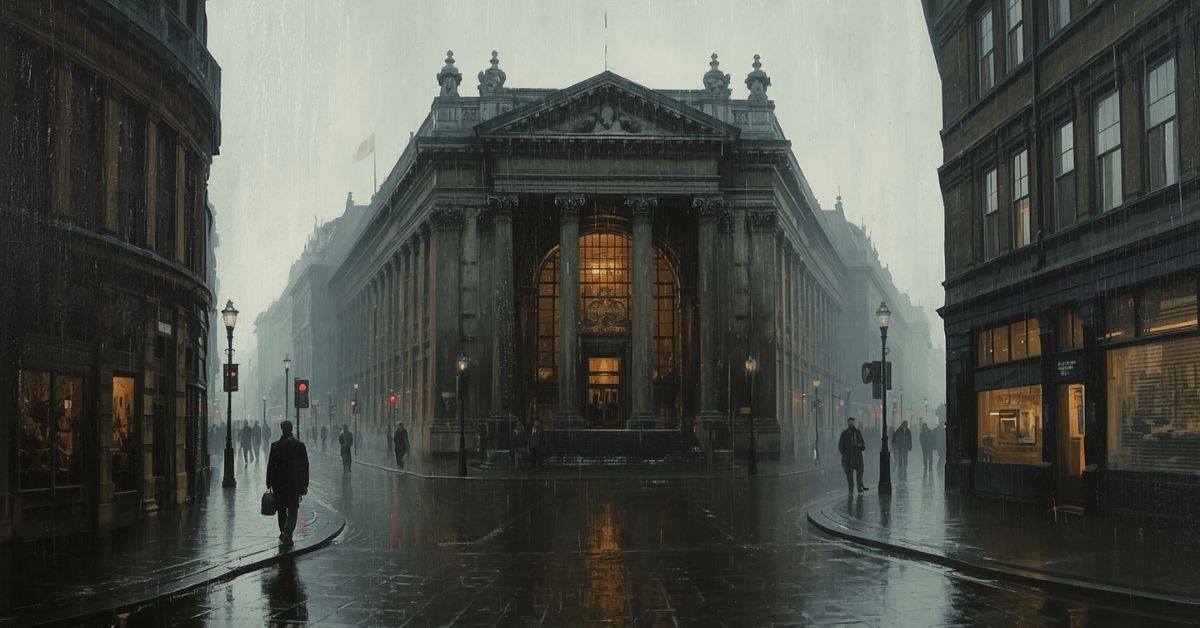
It only appeared when it rained hard enough to erase the city.
Not ordinary rain—the soft kind that tapped politely against windows. This rain came like a curtain pulled across the world, swallowing streets in silver and turning neon signs into blurred smears of color.
On nights like that, the staircase emerged.
Twenty-three steps descending beneath the old train station.
No one else seemed to notice it.
People rushed past with umbrellas tilted low, shoes splashing through puddles, eyes fixed ahead as though the city had trained them never to look too closely at impossible things.
But Mira noticed.
Maybe because she spent her life noticing forgotten things.
She worked in the city archives, preserving documents no one requested and photographs no one recognized anymore. Entire lives reduced to labeled boxes and climate-controlled shelves.
History, she often thought, was just organized disappearance.
The staircase found her on a Thursday evening just after midnight.
Rain hammered the pavement as she waited beneath the station awning, exhausted after another silent day among dust and records. Then she saw it.
A narrow iron staircase where only concrete should have been.
Descending into darkness.
At the bottom glowed a faint amber light.
Mira stared for a long moment.
Then, against all reasonable instinct, she stepped down.
The rain vanished the moment she reached the final stair.
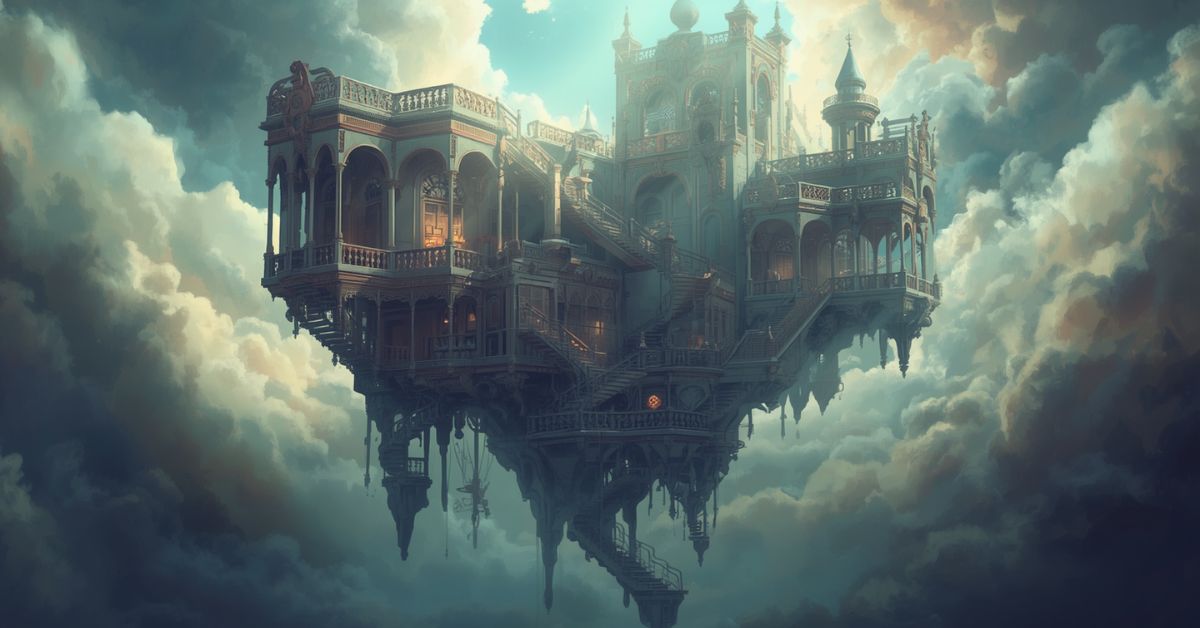
Warm air wrapped around her, carrying the scent of old paper and candle wax. Before her stretched a vast underground library unlike anything she had ever imagined.
Shelves towered endlessly upward into shadows.
Books moved on their own.
Some whispered softly.
Others trembled as though dreaming.
At the center of the room sat an elderly man behind a circular desk, writing carefully with a fountain pen.
He looked up as she approached.
“You’re late,” he said mildly.
Mira blinked. “For what?”
“For your first visit.”
His tone suggested this made perfect sense.
“Where am I?” she asked.
“The Rain Library,” he replied. “Where lost things are catalogued.”
Mira glanced around. “These are books.”
“Yes.”
“But you said lost things.”
The man smiled faintly.
“What is a story if not something someone nearly forgot?”
He gestured toward the shelves.
“Every book here contains a memory the world has abandoned.”
Mira frowned. “You mean fiction?”
“No,” he said gently. “I mean memory.”
He stood and removed a dark blue book from a nearby shelf.
“No title,” Mira noticed.
“Titles are for remembered things.”
The librarian handed it to her.
The moment she opened the cover, the library disappeared.
She stood beside a lake beneath a pale summer sky.
Children laughed nearby. Wind stirred tall grass. A woman sat on a wooden dock reading aloud while a little boy listened beside her.
The scene felt impossibly real.
Mira could smell the water. Hear insects humming.
Then the memory shifted suddenly—as if dissolving—and she was back in the library again, clutching the book tightly.
“What was that?” she whispered.
“A lost afternoon,” the librarian said. “Forgotten by the last person who carried it.”
Mira stared at the shelves differently now.
Not books.
Lives.
Entire moments preserved in ink because no one else remembered them anymore.
“Why keep them?” she asked quietly.
The librarian returned to his desk.
“Because forgotten things do not disappear immediately,” he said. “They wait.”
“For what?”
“To be remembered again.”
Mira returned every time it rained after that.
She read memories belonging to strangers:
A pianist performing for an empty theater during wartime.
A father teaching his daughter how to ride a bicycle.
A final conversation between brothers before one boarded a ship that never returned.
Some memories were joyful.
Others devastating.
But all carried the same fragile ache—the fear of being erased.
Weeks passed before Mira noticed the missing sections.
Shelves with empty spaces.
Books gone.
“What happens to them?” she asked one evening.
The librarian’s expression darkened slightly.
“They fade completely.”
“Why?”
“Because eventually,” he said, “there is no one left who remembers enough to keep them alive.”
The thought unsettled her deeply.
“How many disappear?”
“More each year.”
Mira looked down at the book in her hands.
A birthday party from 1978. Balloons. Chocolate cake. A little girl laughing.
Someone’s entire happiness reduced to a fragile object waiting to vanish forever.
“There has to be a way to save them,” she said.
The librarian studied her carefully.
“There is,” he admitted.
Hope flickered in her chest. “How?”
He hesitated.
“Someone must carry the memories themselves.”
Mira frowned. “You mean memorize them?”
“No,” he said softly. “Become their keeper.”
A cold silence settled between them.
“How many memories can one person hold?” she asked.
The librarian gave a tired smile.
“Fewer than you would hope.”
That night, he showed her a hidden chamber beneath the library.
Inside sat dozens of people in quiet rows, eyes distant and unfocused.
Not asleep.
Not awake.
Remembering.
“They volunteered,” the librarian said quietly. “Each one carries thousands of lost lives so the memories survive a little longer.”
Mira stared in horror.
“They gave up themselves for this?”
“Slowly,” he corrected. “Not all at once.”
One woman turned slightly toward Mira.
For a brief moment, dozens of emotions crossed her face—joy, grief, fear, love—as though many people were looking through her eyes at once.
Then the expression faded again.
Mira stepped back.
“That’s terrible.”
“Yes,” the librarian agreed.
“Then why allow it?”
His gaze moved across the endless shelves.
“Because forgetting everything is worse.”
The next storm arrived three nights later.
Mira stood at the top of the staircase while rain flooded the streets behind her.
In her hands was a small blank book the librarian had given her.
“One memory only,” he had warned. “Choose carefully.”
She thought about all the lives disappearing below the city.
All the moments waiting to be erased forever.
Then she opened the blank book and began to write.
Not someone else’s memory.
Her own.
Her mother singing softly in the kitchen while rain tapped against the windows.
The smell of tea.
Warm yellow light.
The feeling of being safe.
When she finished, words shimmered across the cover for the first time.
A title.
The librarian looked genuinely surprised.
“You named it,” he said quietly.
Mira touched the book gently.
“It mattered,” she replied.
Far above them, thunder rolled across the city.
And deep beneath the rain, among endless shelves of forgotten lives, one memory remained alive because someone had finally chosen not to let it disappear.
Tags: magical library, rain, forgotten stories, fantasy fiction, mystery, memories, books, emotional storytelling